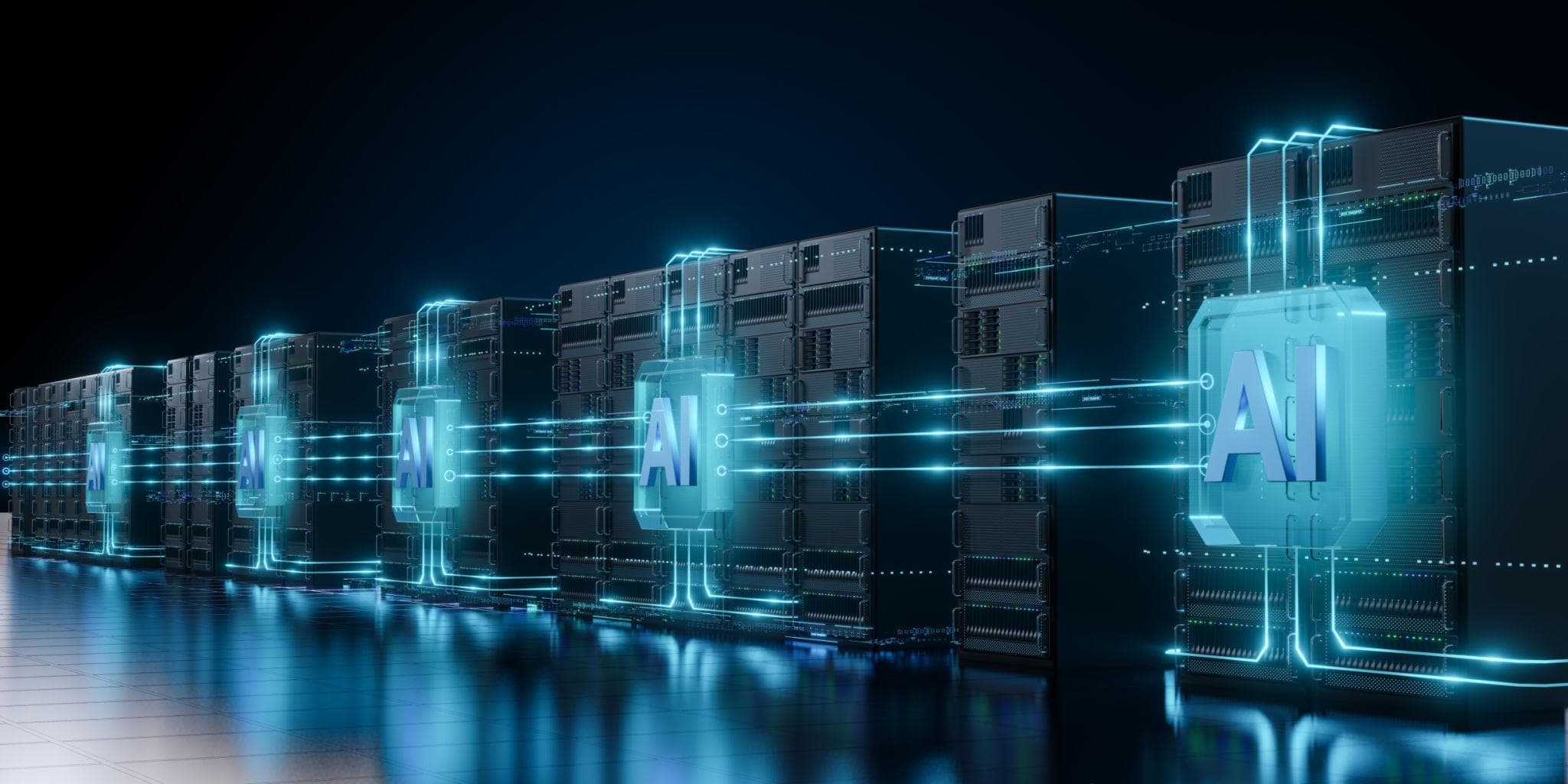
Advanced Computing: GPU Clusters & AI Datacenters
The rise of artificial intelligence has transformed the way modern computing infrastructure is designed. Traditional servers built for general-purpose workloads are no longer sufficient for handling massive AI models, large-scale data processing, and parallel computation. As I explored the world of advanced computing, I became increasingly fascinated by GPU clusters and AI datacenters — the powerful systems that now drive machine learning, scientific simulations, and next-generation cloud platforms. My interest initially began from a hardware and infrastructure perspective. I was curious about how large AI systems process enormous amounts of data so efficiently and why GPUs became central to this revolution. Unlike CPUs, which are optimized for sequential processing, GPUs are designed for massive parallel workloads. Thousands of smaller processing cores can execute operations simultaneously, making them highly effective for neural networks, matrix computations, and high-performance computing tasks. Understanding this architectural difference completely changed the way I viewed modern computing systems. As I studied AI infrastructure further, I realized that GPU clusters are much more than collections of powerful graphics cards. Building scalable AI environments involves networking optimization, storage architecture, workload scheduling, cooling systems, and efficient resource allocation. In large-scale AI datacenters, every component must work together seamlessly to avoid bottlenecks. High-speed interconnects like NVLink and InfiniBand, distributed storage systems, and low-latency networking become critical for maintaining performance across multiple nodes. One aspect that particularly interested me was the relationship between software platforms and physical infrastructure. AI workloads require orchestration systems capable of distributing tasks across multiple GPUs and servers dynamically. Technologies such as Kubernetes, containerized workloads, and GPU virtualization are now deeply integrated into AI infrastructure design. This intersection between software engineering and hardware architecture represents one of the most exciting areas in modern technology because it combines scalability, automation, and computational efficiency at an entirely different level. Another fascinating challenge is energy efficiency and thermal management. AI datacenters consume enormous amounts of power, and maintaining stable operating conditions for dense GPU clusters is a major engineering problem. Advanced cooling systems, optimized airflow, and intelligent workload distribution are becoming increasingly important as AI models continue growing in size and complexity. These infrastructure considerations reveal how modern computing is no longer purely about software — it is equally about physical systems engineering. Exploring GPU clusters and AI datacenters has expanded my understanding of what scalable computing truly means. It showed me that the future of technology depends not only on better algorithms, but also on the infrastructure capable of supporting them. From distributed computing to cloud-native orchestration, AI infrastructure represents the convergence of hardware engineering, networking, virtualization, and software architecture. It is a field where performance, scalability, and innovation continuously push the boundaries of what modern systems can achieve.